


This presentation takes 5-6 minutes to read. If you have problems viewing this digital strategy, or would prefer to view a summary offline, click below.
For renewal and focus
SIWI Strategy
2026 - 2028
SIWI is entering a new phase —
defined by renewal, focus, and action.

With renewed leadership and a clear strategic direction, SIWI is strengthening its role in addressing today’s interconnected water challenges. Building on more than three decades of global engagement, we are refining how we work and how we lead.
Partnership is central to SIWI’s impact. In a rapidly changing world, trusted relationships are essential to a strategy that is robust, relevant, and inclusive. As water sits at the heart of the climate crisis and wider sustainability challenges, SIWI is sharpening its focus to drive solutions — from local action to global policy.
This strategy is designed to establish a clear direction for SIWI over the 2026–2028 period and beyond.
It aims to ensure strategic alignment across the organization, grounded in shared ambition and long-term impact.
Like many organizations, we have periodically reviewed our direction and priorities. After a period of significant growth and diversification, SIWI initiated a major strategic renewal process in 2024. This process reaffirmed our core mission: to serve as a trusted multi-stakeholder platform and co-creator of solutions for improved water governance and sustainable water management in partnership with others.
Going forward, SIWI will sharpen our focus, deepen collaboration with key partners, and ensure that our work continues to respond to the world’s most pressing water challenges, now and into the future.

Water challenges are intensifying, but responses remain fragmented across sectors, regions, and decision-making levels. Water is still not treated as a strategic foundation for climate resilience, development, and peace.
The challenge today?
Fragmented responses, rising risks.
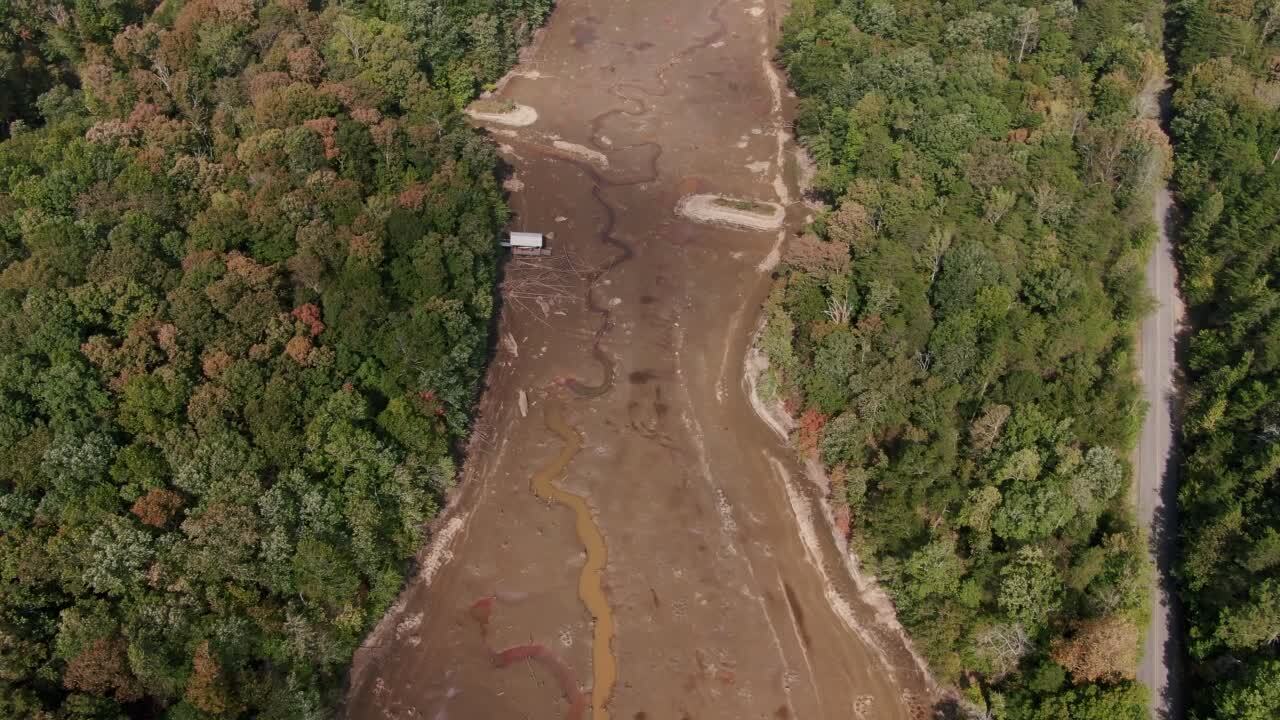
Climate change is disrupting the global water cycle—longer droughts, more intense floods, and shifting rainfall patterns are straining ecosystems, agriculture, and livelihoods worldwide.
What's driving the pressure?
Climate and systems under strain.

At the same time, funding is more competitive and accountability expectations are rising. This exposes a governance gap: institutions and actors need better coordination, skills, and practical tools to respond effectively.
The governance gap.
Impact demands better governance.
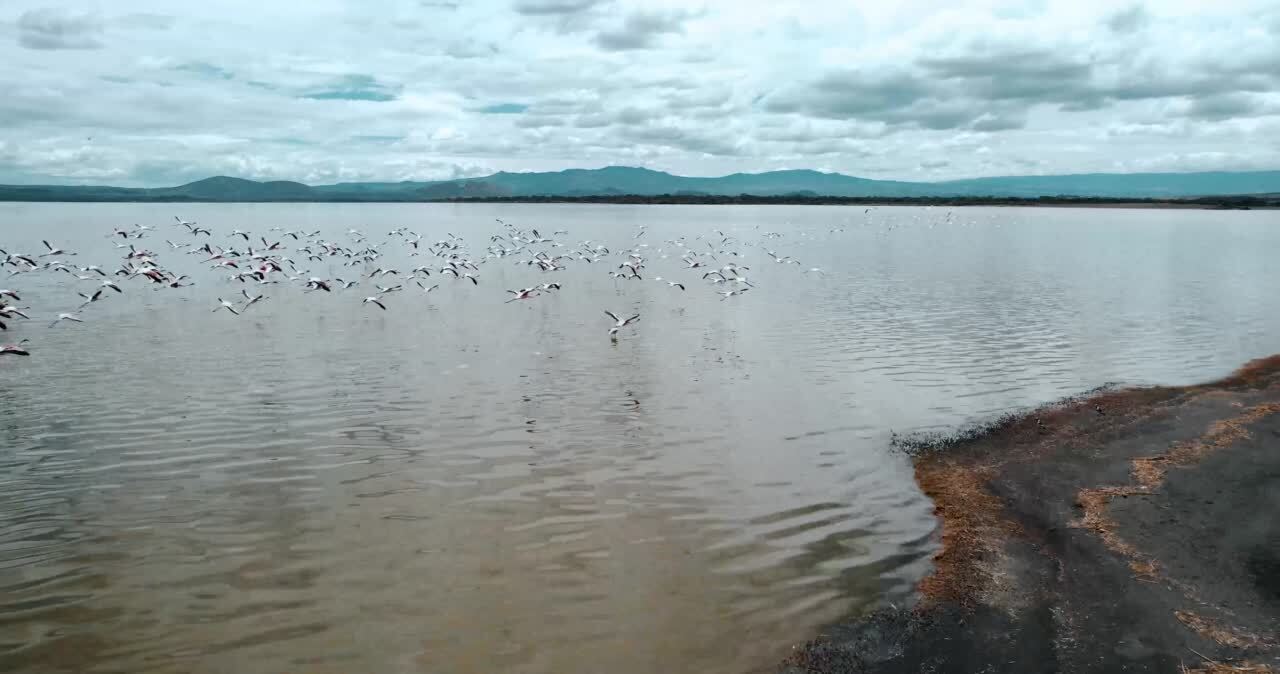
Meeting these challenges requires more adaptive, inclusive, and integrated water governance. This strategy sharpens SIWI’s focus, strengthens partnerships, and builds on our core strengths to deliver impact where it matters most.
What this means for SIWI?
Why this strategy?
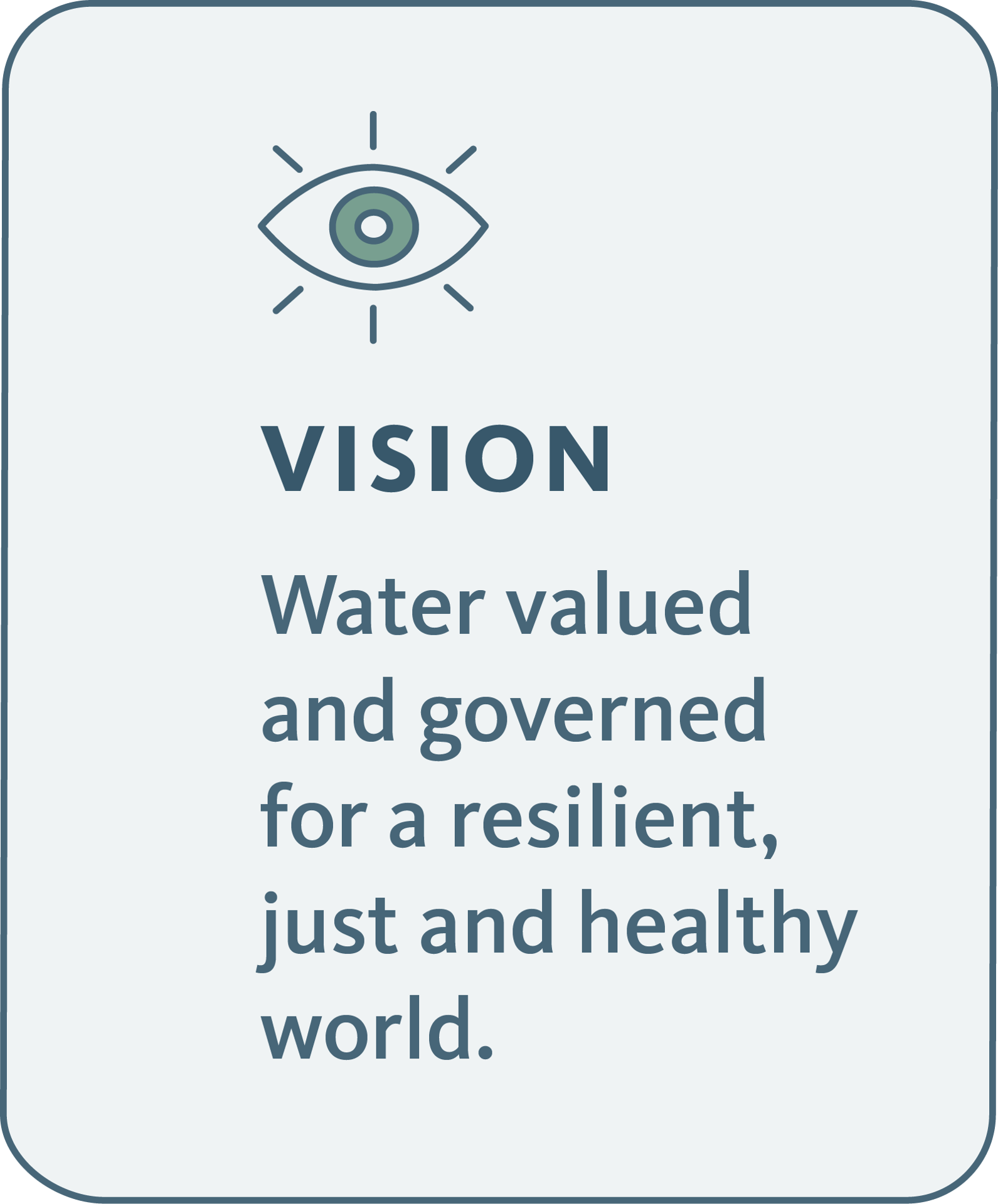
VISION
Water valued and governed for a resilient, just and healthy world.

MISSION
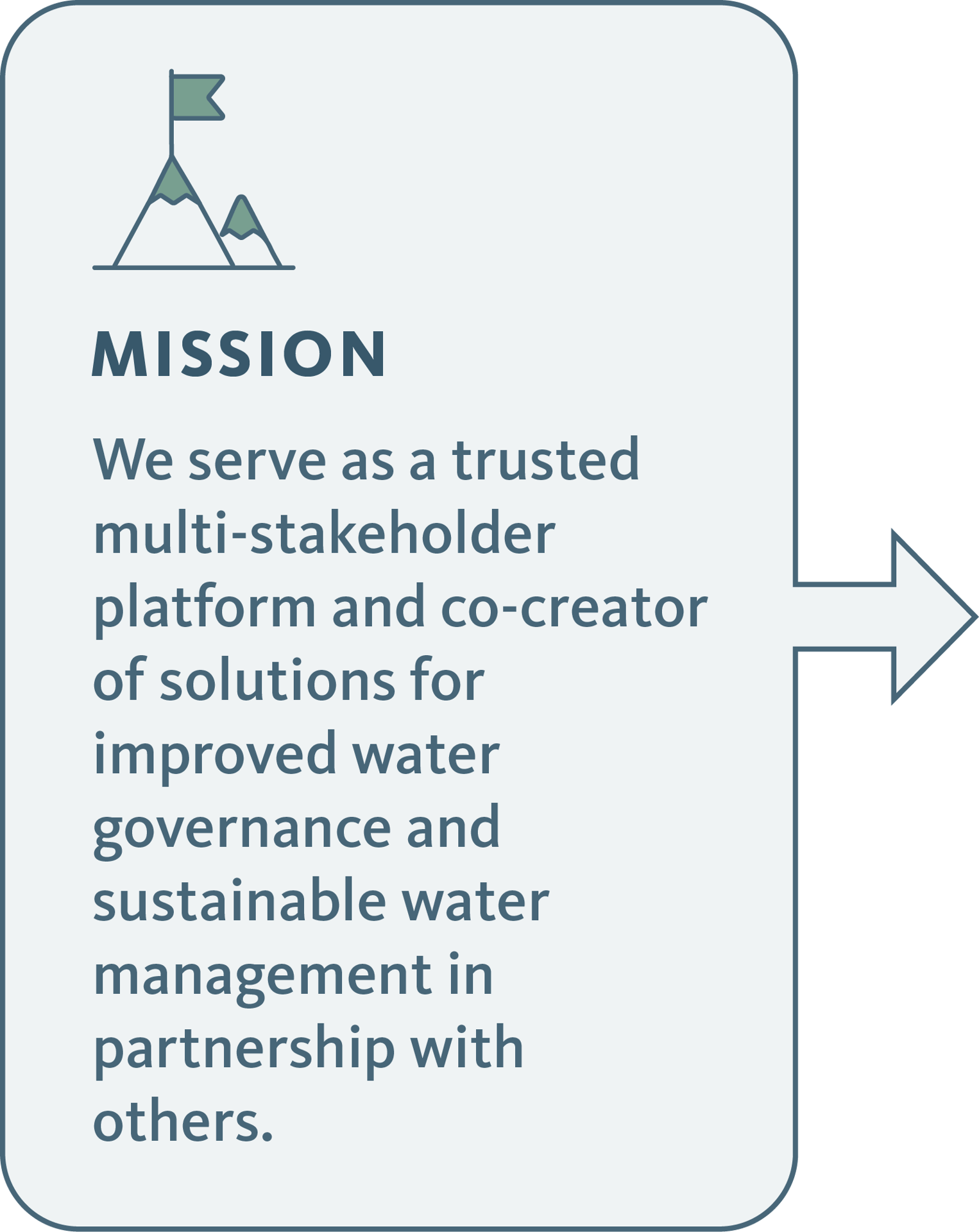
We serve as a trusted multi-stakeholder platform and co-creator of solutions for improved water governance and sustainable water management in partnership with others.


Vision and Mission
A world where water is wisely governed is one where societies thrive, ecosystems endure, and peace can take root. Yet today, water is still undervalued, poorly managed, and increasingly strained by climate change, conflict, and inequality. This vision speaks to a shared global need—to recognize water’s true value and govern it as the foundation of resilience, justice, and health for all. It also reflects our belief that sustainable solutions emerge when governance systems respect both people and nature and ensure that everyone’s voice is heard.
OUR VISION
SIWI’s mission defines how we turn that vision into practice. We bring people together—across sectors, disciplines, and regions—to co-create solutions grounded in trust, evidence, and inclusion. As an impartial platform and knowledge leader in water governance, we work in partnership to bridge science and policy, dialogue and decision-making, local realities and global ambitions. This is our unique value: advancing collective action that strengthens water governance and delivers long-term impact.
OUR MISSION
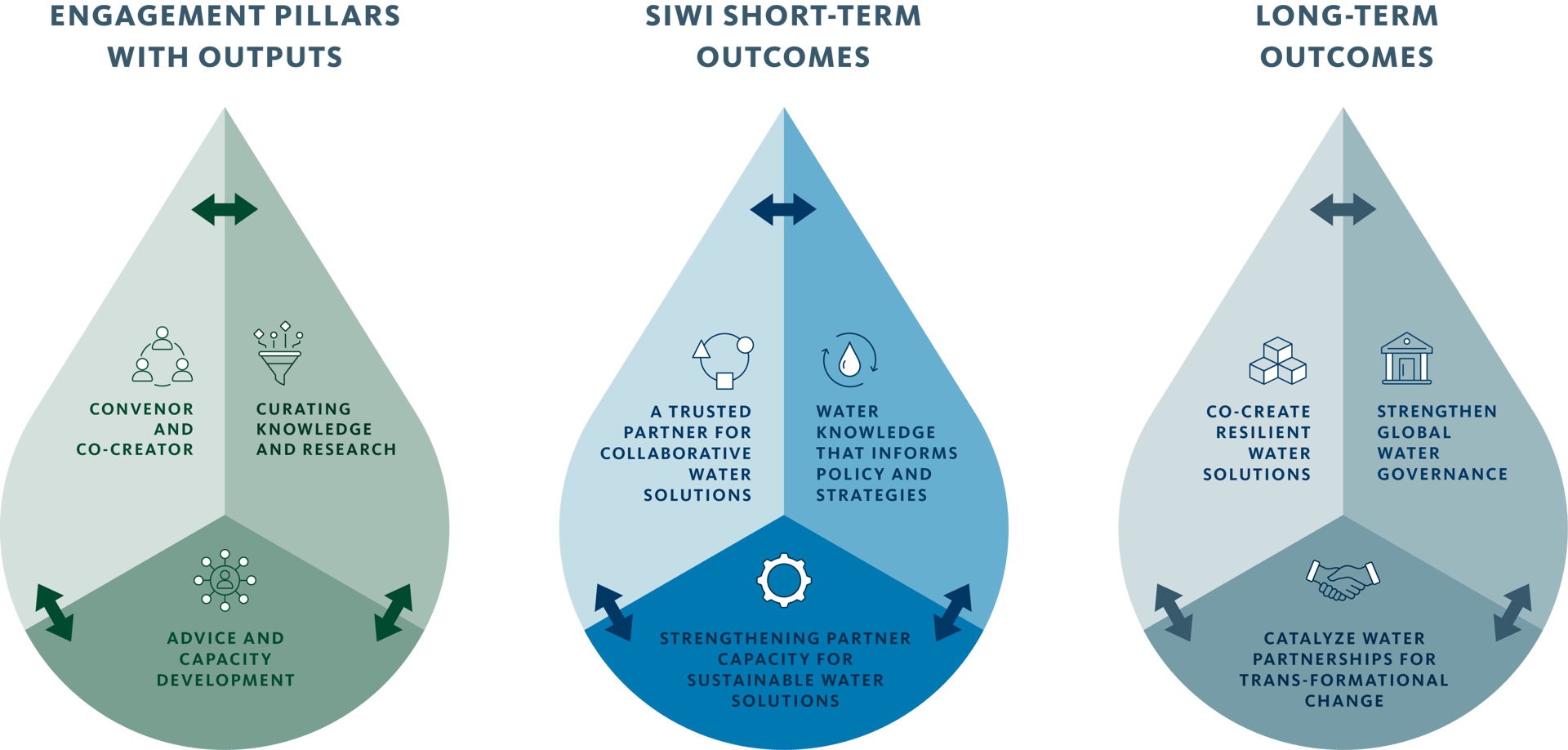
Our long-term outcomes define SIWI’s contribution to lasting change in water governance. By advancing how water is valued and governed, SIWI brings actors together, translates knowledge into policy, and co-creates solutions that deliver impact beyond this strategy period.
SIWI long-term outcomes
In collaboration with others, we provide policy guidance and evidence-based knowledge that shape governance frameworks and inform decision-making, securing water’s recognition as essential for life, peace, stability, and economic development.
2
By convening partners and co-creating knowledge, we advance resilient and just water solutions that shape the global agenda.
1
We build and strengthen partnerships that link knowledge, policy, and practice, accelerating implementation and scaling of innovative water solutions.
3

Our long-term outcomes define SIWI’s contribution to lasting change in water governance. By advancing how water is valued and governed, SIWI brings actors together, translates knowledge into policy, and co-creates solutions that deliver impact beyond this strategy period.
SIWI long-term outcomes
3
2
By convening partners and co-creating knowledge, we advance resilient and just water solutions that shape the global agenda.
In collaboration with others, we provide policy guidance and evidence-based knowledge that shape governance frameworks and inform decision-making, securing water’s recognition as essential for life, peace, stability, and economic development.
We build and strengthen partnerships that link knowledge, policy, and practice, accelerating implementation and scaling of innovative water solutions.
1
3
2
1
By 2028, SIWI will translate strategy into measurable results. These short-term outcomes define what we will deliver during this period—strengthening partnerships, advancing actionable knowledge, and building the capabilities needed for lasting change in water governance.
SIWI short-term outcomes, 2026 - 2028
By 2028, we are a trusted partner whose convening and dialogue platforms consistently lead to collaborative actions and solutions addressing water-related opportunities and challenges.
1
By 2028, we dependably co-create and curate water knowledge that informs policies, strategies, and water governance reforms across regions and sectors.
2
By 2028, we have strengthened the capabilities of partners and stakeholders to implement sustainable water solutions through knowledge sharing, co-creation, and support to institutional capacity.
3

By 2028, SIWI will translate strategy into measurable results. These short-term outcomes define what we will deliver during this period—strengthening partnerships, advancing actionable knowledge, and building the capabilities needed for lasting change in water governance.
1
2
By 2028, we are a trusted partner whose convening and dialogue platforms consistently lead to collaborative actions and solutions addressing water-related opportunities and challenges.
By 2028, we dependably co-create and curate water knowledge that informs policies, strategies, and water governance reforms across regions and sectors.
By 2028, we have strengthened the capabilities of partners and stakeholders to implement sustainable water solutions through knowledge sharing, co-creation, and support to institutional capacity.
3
3
1
2
SIWI short-term outcomes, 2026 - 2028
SIWI Outputs - Three Engagement Pillars
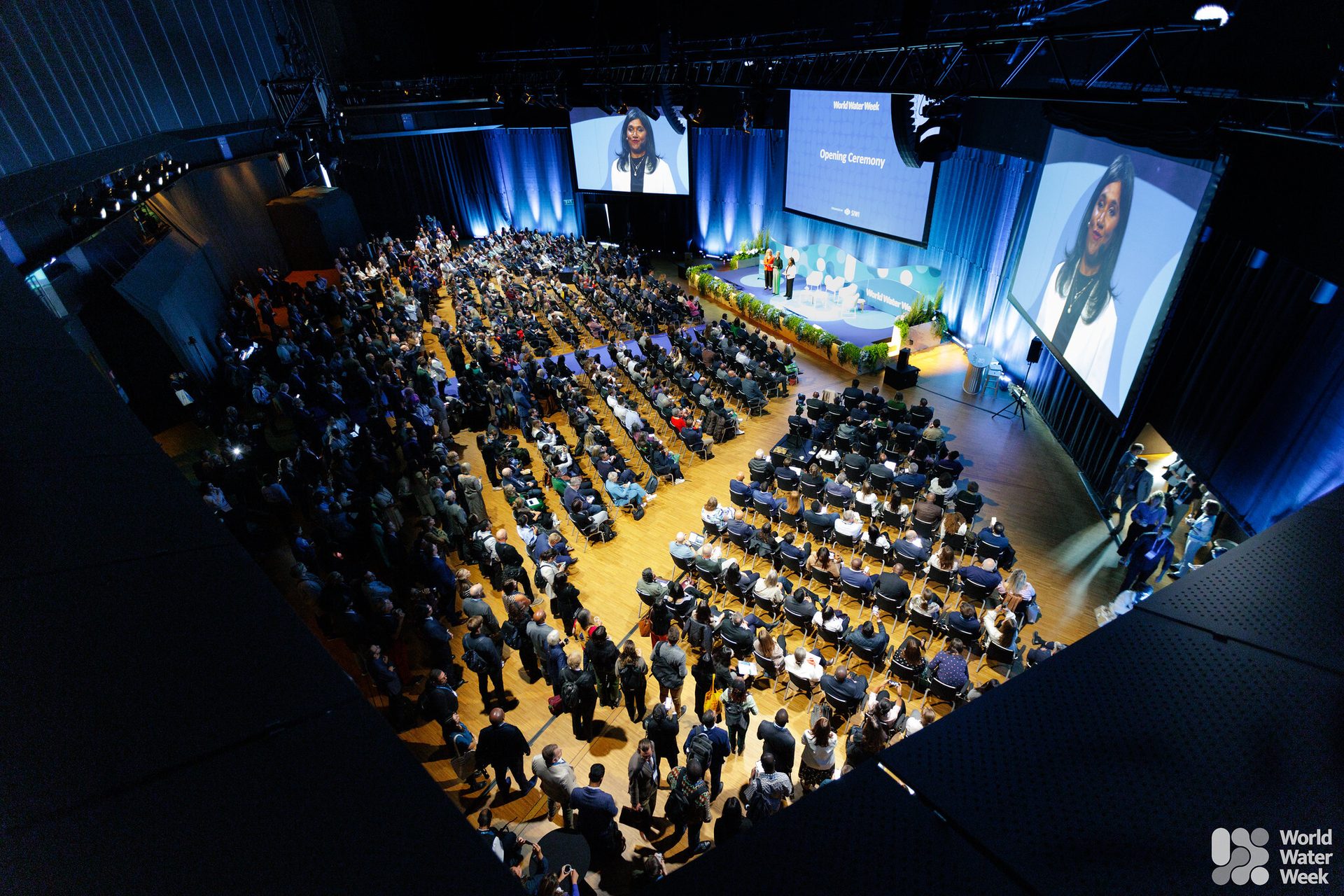
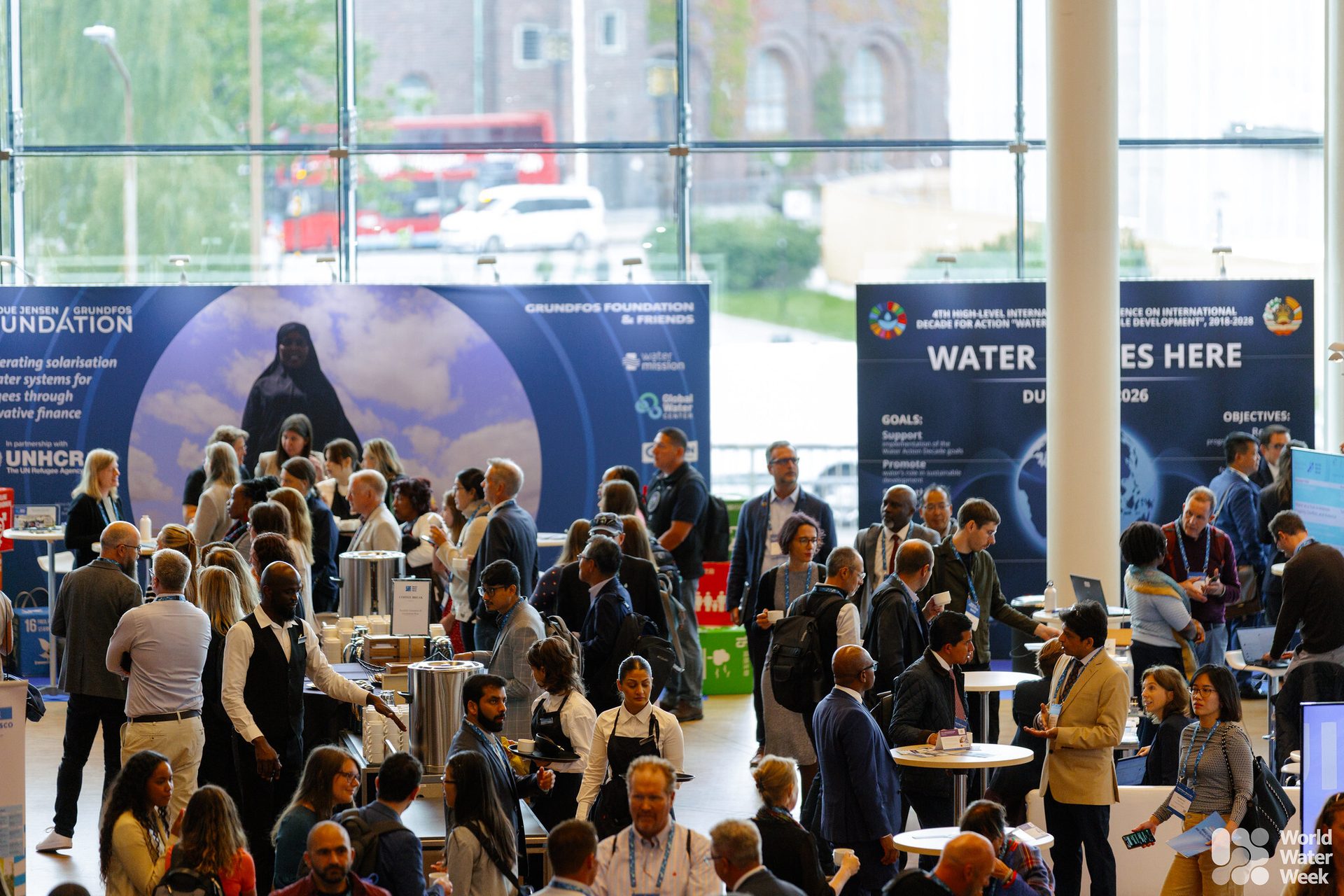
These engagement pillars are realized through our flagship initiatives, most notably World Water Week. As a leading global event for water and cross-sectoral collaboration, World Water Week provides a powerful way to deliver on all three pillars—linking knowledge, policy, and practice through inclusive dialogue and co-creation.
In the coming years, SIWI will place stronger focus on World Water Week as a space for connecting insights and outcomes across its work. By aligning the Week more closely with global processes, including the Rio Conventions – United Nations Framework Convention on Climate Change (UNFCCC), the Convention on Biological Diversity (CBD), and the United Nations Convention to Combat Desertification (UNCCD), SIWI will help position water as a systems connector and promote collaboration across sectors throughout the year.
The three pillars are deeply interconnected: knowledge informs advice, dialogue sparks insight, and capacity development drives collective action. Each pillar is central to our mission, success, and continued relevance. They guide our outputs and are operationalized through detailed activities set out in the 2026–2028 action plans.
Partnerships and co-creation are embedded in all our outcomes, outputs, and activities. Working with our partners, we will continue to strengthen our role as a trusted facilitator, knowledge broker, and contributor to policy processes that advance sustainable water governance.
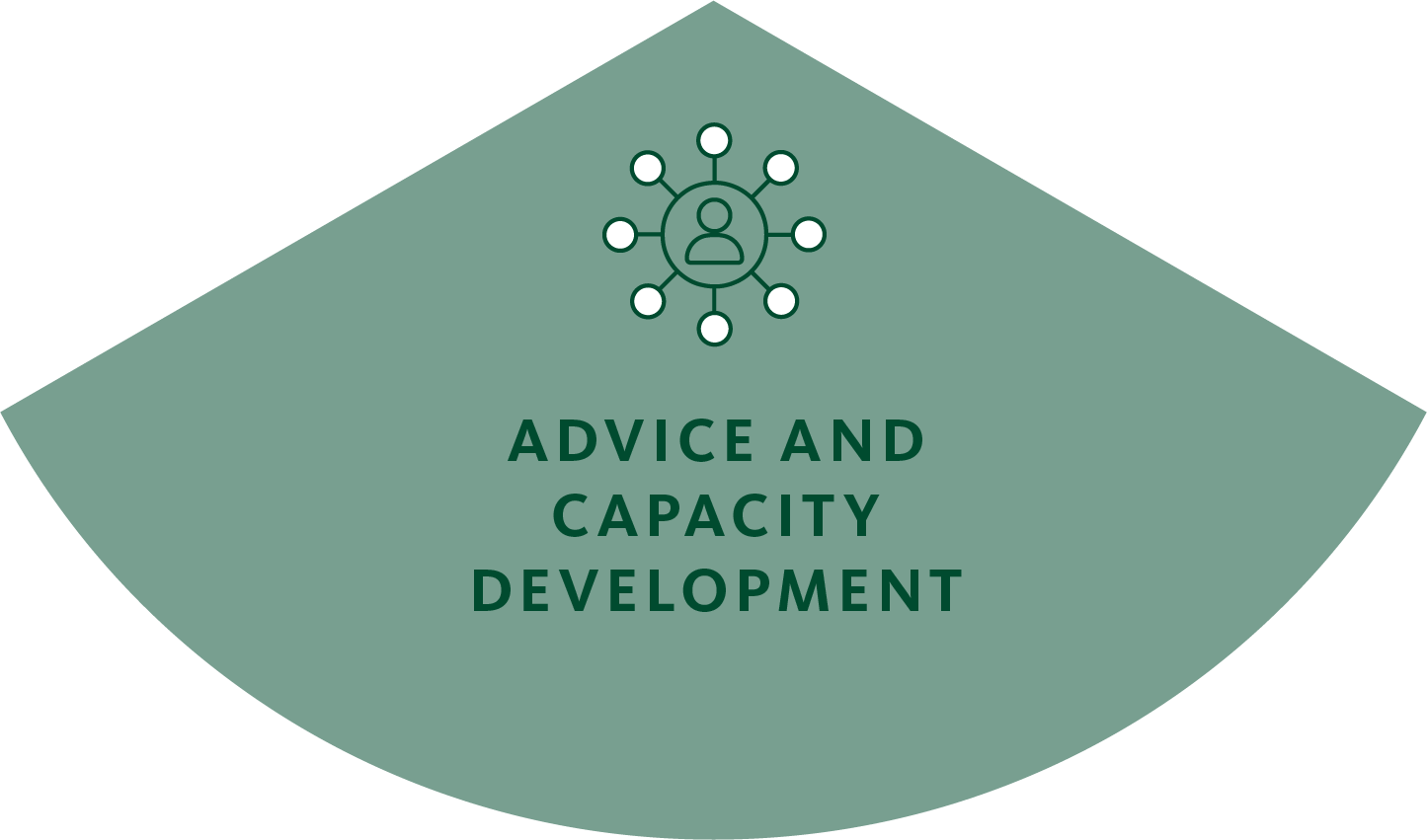
We broker knowledge and build capacity, enabling partners to apply insights in practice, and achieve tangible outcomes.
3

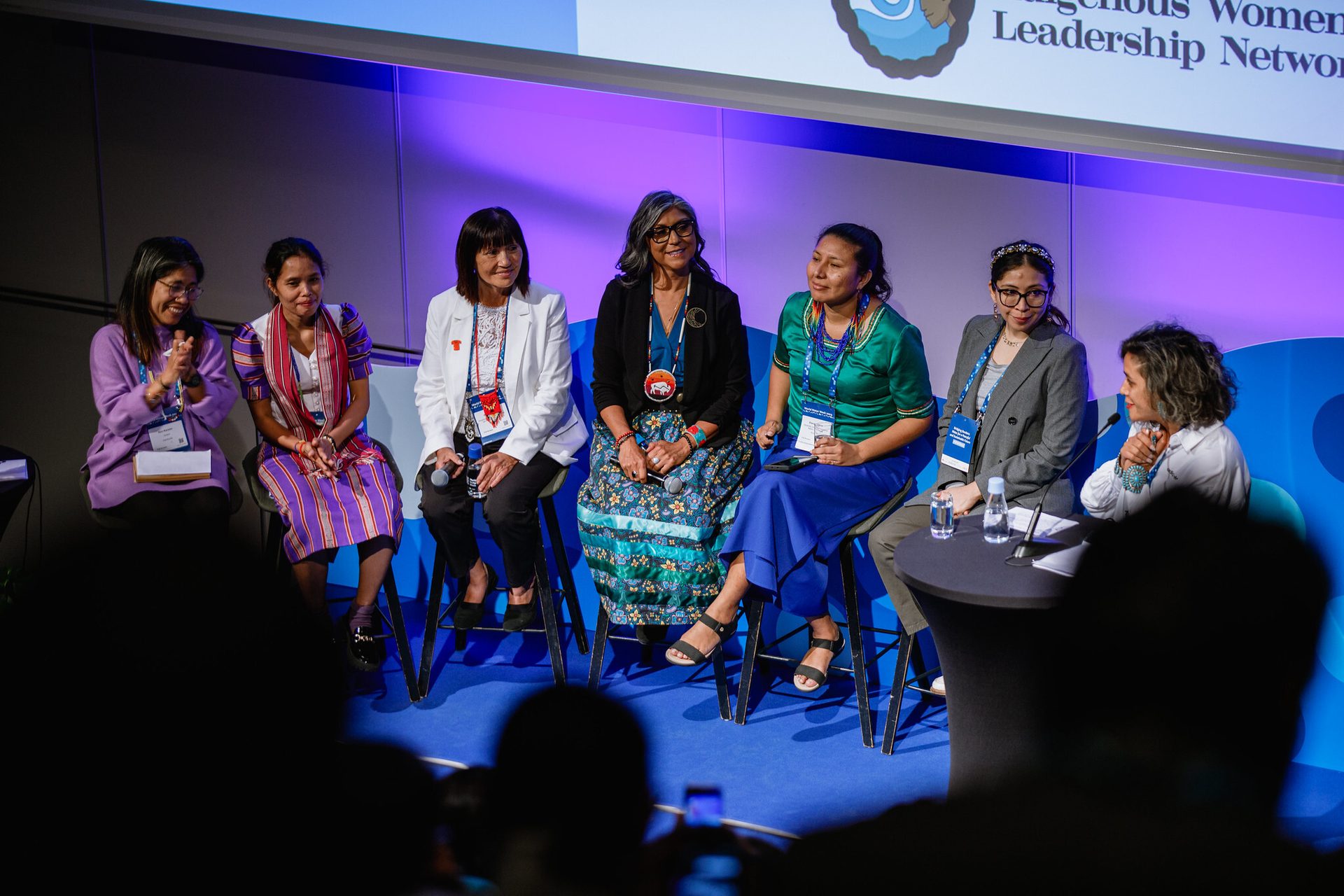
We serve as a trusted, impartial platform to unite diverse actors, foster inclusive dialogue, and co-create solutions that drive collective action.
1

We curate, co-create, and connect trusted water knowledge, translating it into policy-relevant insights and recommendations, and building partnerships that deliver improvements in water governance.
2

We will focus on three mutually reinforcing engagement pillars to deliver our future development and organizational outputs and activities. Each pillar is driven by partnerships and year-round engagement that catalyzes collaboration, strengthens knowledge, raises awareness, and builds capacity for improved water governance among decision-makers, managers, and users.
These engagement pillars are realized through our flagship initiatives, most notably World Water Week. As a leading global event for water and cross-sectoral collaboration, World Water Week provides a powerful way to deliver on all three pillars—linking knowledge, policy, and practice through inclusive dialogue and co-creation.
In the coming years, SIWI will place stronger focus on World Water Week as a space for connecting insights and outcomes across its work. By aligning the Week more closely with global processes, including the Rio Conventions – United Nations Framework Convention on Climate Change (UNFCCC), the Convention on Biological Diversity (CBD), and the United Nations Convention to Combat Desertification (UNCCD), SIWI will help position water as a systems connector and promote collaboration across sectors throughout the year.
The three pillars are deeply interconnected: knowledge informs advice, dialogue sparks insight, and capacity development drives collective action. Each pillar is central to our mission, success, and continued relevance. They guide our outputs and are operationalized through detailed activities set out in the 2026–2028 action plans.
Partnerships and co-creation are embedded in all our outcomes, outputs, and activities. Working with our partners, we will continue to strengthen our role as a trusted facilitator, knowledge broker, and contributor to policy processes that advance sustainable water governance.
3
We serve as a trusted, impartial platform to unite diverse actors, foster inclusive dialogue, and co-create solutions that drive collective action.
We curate, co-create, and connect trusted water knowledge, translating it into policy-relevant insights and recommendations, and building partnerships that deliver improvements in water governance.
We broker knowledge and build capacity, enabling partners to apply insights in practice, and achieve tangible outcomes.
1
2
3
2
1
We will focus on three mutually reinforcing engagement pillars to deliver our future development and organizational outputs and activities. Each pillar is driven by partnerships and year-round engagement that catalyzes collaboration, strengthens knowledge, raises awareness, and builds capacity for improved water governance among decision-makers, managers, and users.
SIWI Outputs - Three Engagement Pillars
Thematic Areas
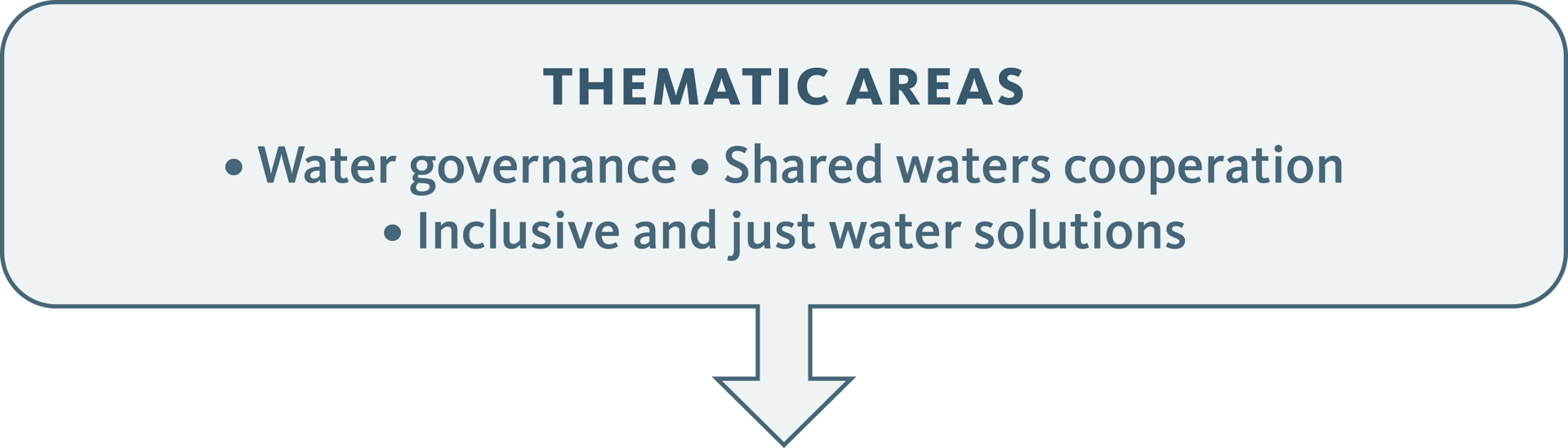
Through 2028, SIWI will focus on three thematic areas. These thematic areas will guide all of our engagement pillars – (i) convening and co-creating, (ii) curating knowledge and research, and (iii) advice and capacity building.
Each thematic area will build upon collaboration with our partners through existing and new platforms and alliances.
Thematic Areas
Through 2028, SIWI will focus on three thematic areas. These thematic areas will guide all of our engagement pillars – (i) convening and co-creating, (ii) curating knowledge and research, and (iii) advice and capacity building.
Each thematic area will build upon collaboration with our partners through existing and new platforms and alliances.
We will maintain close collaboration with the Stockholm Water Foundation (the City of Stockholm), the Stockholm Water Prize, and the Stockholm Junior Water Prize, ensuring alignment and synergy, particularly in relation to World Water Week.
STRATEGIC COLLABORATION
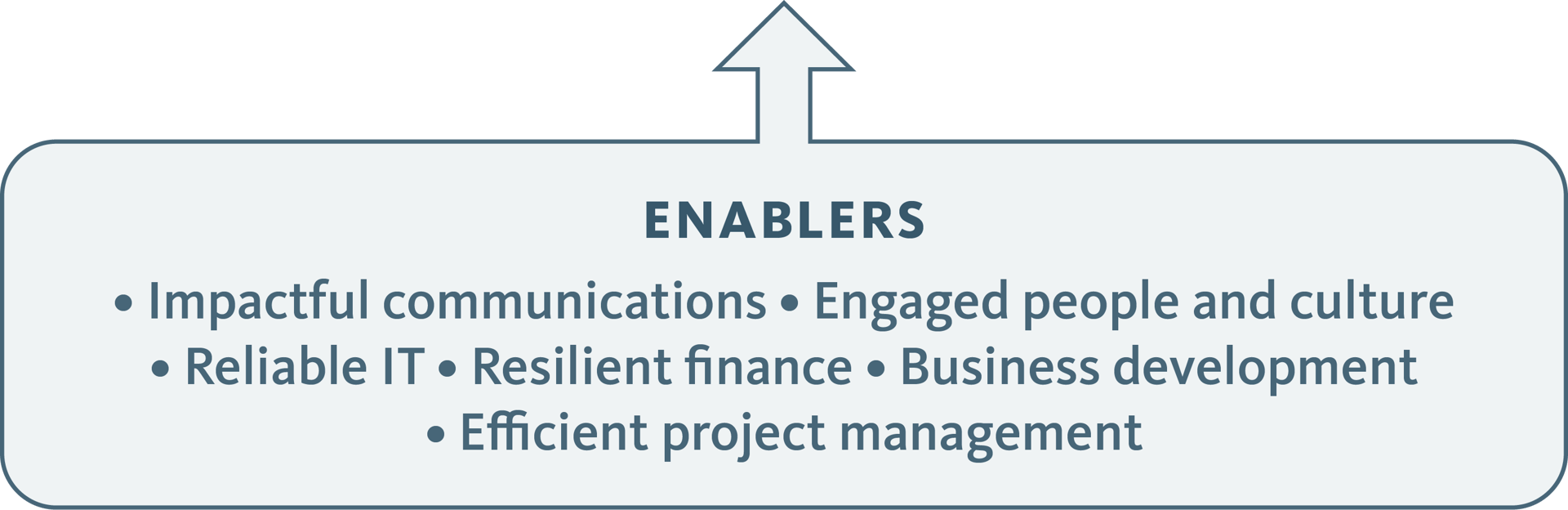
To deliver on our new strategy, we are evolving how we work — guided by what we call our enablers: Communications, HR, IT, Finance, Partnership development, and Project management. These functions form the backbone of our organization, translating strategic ambitions into day-to-day action and long-term results.
Our enablers help connect the dots across SIWI, linking projects, themes, and engagement pillars so we can collaborate more effectively and act as One SIWI. In the years ahead, we will focus on stronger alignment between teams, clearer processes, and shared priorities, ensuring that our resources, partnerships, and expertise are used where they have the greatest impact.
STRATEGIC ENABLERS
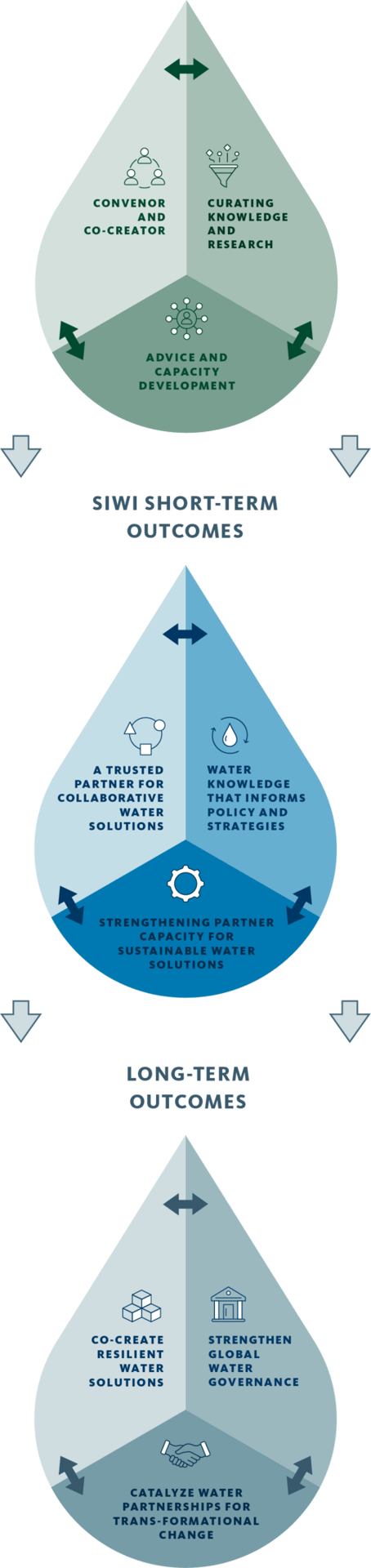
SIWI's Theory of Change


SIWI's Theory of Change

A final word from SIWI's Executive Director
From foundation to focus
Founded in 1991, SIWI was created to bridge science, policy, and practice — and to demonstrate how water underpins sustainable development, peace, and prosperity. From the outset, trust, dialogue, and collaboration have defined our role.
Over time, SIWI has evolved from convening dialogue to actively contributing to global water governance. As an impartial partner, we have advanced knowledge, policy processes, and capacity development in areas such as water diplomacy, climate and water resilience, and inclusive governance.
World Water Week reflects this evolution. What began as a small scientific symposium has become one of the world’s leading platforms for water cooperation, connecting water to climate, food, energy, finance, and equality. Our long-standing collaboration with the City of Stockholm — including the Stockholm Water Prize and Stockholm Junior Water Prize — remains central to this work.
Following a period of growth and diversification, SIWI initiated a strategic renewal in 2024. This process reaffirmed our core mission: to act as a trusted multistakeholder platform and co-creator of solutions for improved water governance. Building on this foundation, SIWI is sharpening its focus, deepening partnerships, and positioning itself to meet the world’s most urgent water challenges.

Stockholm International Water Institute
Organisation Number: 802425-8702
VAT Number: SE 802425870201
Contact us: siwi@siwi.org
©2026 Stockholm International Water Institute
Visiting address: Hammarbybacken 31
Postal address: Kabyssgatan 4D
120 30 Stockholm
Sweden